Audience targeting used to be relatively straightforward. Advertisers could combine third-party data, audience segments, and behavioural signals to reach potential customers at scale. While the process wasn’t perfect, it gave marketers a reliable way to identify and activate audiences across the open web.
Today, that environment looks very different.
Privacy regulations have evolved. Third-party cookies are becoming less reliable and less available across major browsers. Consumers are engaging with brands across more devices and channels than ever before. At the same time, marketing teams face growing pressure to justify media spend and prove campaign performance.
As a result, many advertisers are asking the same question: How do you continue reaching the right audiences when traditional targeting methods are becoming less reliable?
This challenge is one of the biggest reasons Amazon DSP has become increasingly important in programmatic advertising.
The conversation isn’t really about Amazon as a platform. It’s about the growing need for better audience signals, stronger targeting capabilities, and more effective ways to connect media investments with consumer intent.
TL;DR
- Audience targeting is becoming more challenging as third-party data becomes less reliable.
- Advertisers are placing greater value on first-party data and purchase-intent signals.
- Amazon DSP helps advertisers reach audiences using insights based on shopping and browsing behaviour.
- Retail media data is increasingly influencing programmatic advertising strategies beyond ecommerce campaigns.
- The growing adoption of Amazon DSP reflects a broader shift toward more audience-centric programmatic advertising.
The Audience Targeting Challenge Facing Advertisers Today
For years, programmatic advertising was about building audience segments, activating campaigns quickly, and reaching consumers across thousands of websites and apps. But as the industry becomes more privacy-conscious, many of the signals marketers previously relied on are becoming harder to access.
This doesn’t mean audience targeting is disappearing.
It means advertisers need better ways to understand who they’re reaching and how likely those audiences are to engage.
That’s becoming particularly important as media costs continue to rise. When budgets are under pressure, reaching the right people becomes far more valuable.
Many advertisers are therefore shifting their focus away from audience volume and toward audience quality.
Why First-Party Data Is Becoming More Valuable
One of the biggest changes in programmatic advertising is the growing importance of first-party data.
As third-party signals become less dependable, advertisers are looking for audience insights based on direct consumer interactions.
The value of first-party data is that it can provide stronger indicators of consumer intent.
For example, there is a meaningful difference between someone who broadly fits a demographic profile and someone who has actively researched products, compared options, or demonstrated interest in a particular category. Those signals can help advertisers make more informed targeting decisions.
This is one reason Amazon DSP has gained attention.
Because Amazon operates one of the world’s largest ecommerce ecosystems, advertisers can access audience segments informed by actual shopping and browsing activity. These signals help marketers
move beyond broad assumptions and build campaigns around consumers who have demonstrated relevant interests or purchase intent.
For advertisers, this matters because stronger audience signals can help improve campaign relevance. Instead of relying solely on broad demographic assumptions, marketers can build strategies around consumers who have shown genuine interest in specific products or categories. In increasingly competitive markets, even small improvements in audience quality can make media spend work harder.
How Amazon DSP Is Changing the Way Advertisers Build Campaigns
Perhaps the biggest impact Amazon DSP is having on programmatic advertising is changing how advertisers think about campaign planning.
Traditionally, media planning often started with channels.
A brand would determine how much budget should go toward display, video, mobile, or television before deciding how audiences would be reached within those environments.
Increasingly, advertisers are reversing that process.
Instead of starting with channels, they’re starting with audiences.
The question is no longer simply: “Where should we run ads?”
It’s becoming: “Who are we trying to reach, and what signals help us identify them?”
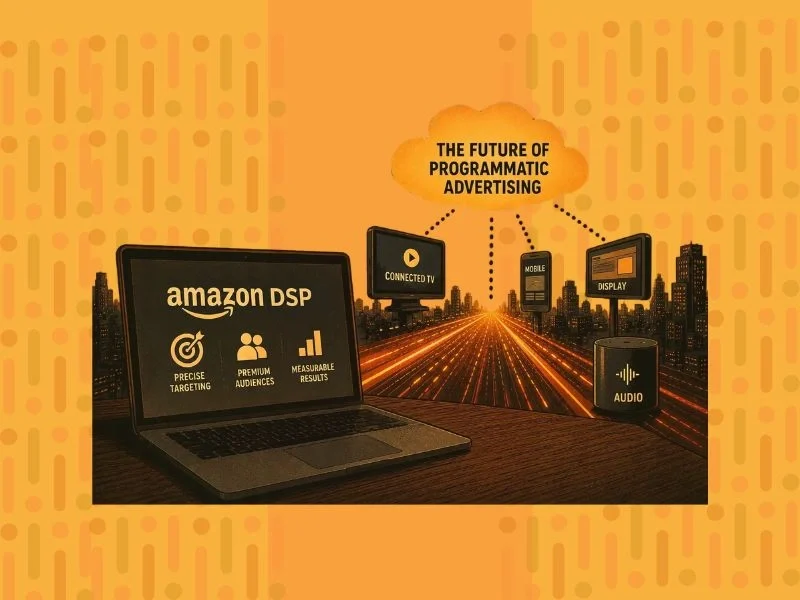
This allows advertisers to maintain a more consistent audience strategy across display, video, audio, and CTV campaigns rather than rebuilding audience plans for each channel independently.
This is particularly valuable for advertisers trying to create more connected customer journeys across channels. Rather than approaching each channel in isolation, marketers can apply the same audience strategy across multiple touchpoints, helping create a more consistent experience as consumers move between devices and platforms.
The result is a more audience-centric approach to programmatic advertising rather than a channel-centric one.
In many ways, this reflects a broader industry shift from channel-based media planning toward audience-based planning, a change that is increasingly shaping how programmatic campaigns are built and measured.
Retail Media Data Is Expanding Beyond Ecommerce
One of the most significant developments in digital advertising is the growing influence of retail media data.
Historically, retail media was often viewed as a channel designed primarily for driving product sales.
Today, advertisers are increasingly using retail audience insights to support broader marketing objectives.
A consumer researching products today may not make a purchase immediately. However, their behaviour can still provide valuable signals about interests, preferences, and purchase intent.
These insights can help inform awareness campaigns, consideration-stage messaging, video strategies, and even CTV activations.
This is another reason Amazon DSP is becoming more relevant to advertisers that don’t necessarily sell products on Amazon. Importantly, advertisers can use Amazon DSP to reach audiences across a wide range of third-party websites, apps, streaming platforms, and connected TV environments, not just Amazon-owned properties.
The platform is increasingly being viewed as a source of audience intelligence rather than simply a media buying tool.
Why Amazon DSP Matters for Modern Programmatic Advertising
The growing interest in Amazon DSP reflects broader changes happening across the advertising industry.
Advertisers want targeting strategies that are less dependent on disappearing identifiers.
They want audience insights that provide stronger signals of intent.
And they want the ability to apply those insights consistently across channels. They also want greater visibility into how those audiences engage across different media environments. As advertisers become more accountable for performance, access to stronger audience insights and campaign reporting is becoming increasingly important.
Amazon DSP aligns with all three priorities.
More importantly, it reflects a shift in how programmatic advertising is evolving.
The industry is moving away from a model centred primarily on impressions and reach and toward one focused on audience quality, relevance, and measurable outcomes.
For advertisers, that’s a meaningful change.
Because the future of programmatic advertising won’t simply be defined by how many people a campaign reaches. It will increasingly be defined by how effectively advertisers understand and engage the audiences that matter most.
Where Programmatic Advertising Is Heading
Amazon DSP is often discussed as a platform, but its growing influence points to a larger shift taking place across programmatic advertising.
Advertisers are operating in an environment where audience targeting is becoming more complex, consumer journeys are increasingly fragmented, and expectations around campaign performance continue to rise.
As a result, marketers are placing greater importance on audience quality, first-party data, and signals that provide a clearer understanding of consumer intent.
That’s one of the reasons Amazon DSP is attracting attention across the industry. It reflects a broader move toward audience-driven advertising strategies that help marketers make more informed media decisions.
For advertisers, the takeaway is straightforward. Success is becoming less about reaching the largest possible audience and more about reaching the most relevant one. As programmatic advertising continues to evolve, the ability to identify high-intent audiences and activate those insights across channels will become increasingly valuable.