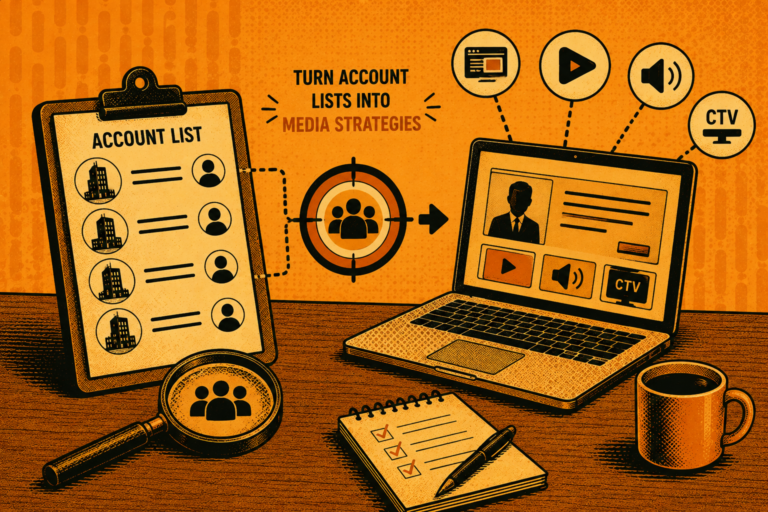
Programmatic advertising has become a core part of modern media buying. It gives agencies access to premium inventory, advanced audience targeting, real-time optimisation, and measurable performance across channels like display, video, audio, and Connected TV (CTV).
So why do many agencies still hesitate to recommend it to smaller clients?
It’s not because they doubt programmatic’s effectiveness. More often, it’s because delivering programmatic campaigns for smaller-budget clients isn’t always commercially or operationally straightforward.
An agency might manage a national retailer investing hundreds of thousands of pounds into media every month, alongside a regional B2B company with a fraction of that budget. Both clients expect smart media strategies, transparent reporting, and measurable results. But the commercial realities of delivering those campaigns can be very different.
Instead of focusing on audience strategy, creative effectiveness, or campaign objectives, agencies often find themselves weighing platform limitations, operational overhead, and whether a smaller campaign is commercially viable before it even gets off the ground. That shifts the conversation away from marketing outcomes and toward the practical realities of running the campaign.
TL;DR
- Programmatic advertising isn’t just for enterprise brands. Smaller clients can achieve strong results with the right strategy and the right platform.
- The biggest barriers are operational, not strategic. DSP minimum spends, complex workflows, and time-intensive campaign management often make smaller campaigns difficult for agencies to run profitably.
- Success depends more on precision than budget size. Well-defined audiences, realistic objectives, and focused targeting often deliver better outcomes than broad-reach campaigns.
- AI and automation are making programmatic more accessible. Features like AI-powered optimisation, automated budget allocation, and streamlined reporting reduce manual effort and help agencies manage campaigns more efficiently.
- Flexible DSPs are changing the equation. Platforms designed to support agencies of all sizes make it easier to deliver sophisticated programmatic campaigns without the commercial barriers associated with many enterprise-only solutions.
These are some of the most common questions agencies are asking today:
- Is programmatic advertising worth it for smaller clients?
- Can smaller budgets still deliver meaningful results?
- Why do some DSPs require minimum media spends?
- What should agencies look for in a programmatic advertising platform?
- Why are more UK agencies exploring alternatives to enterprise DSPs?
Let’s answer each of those questions.
Is Programmatic Advertising Worth It for Smaller Clients?
The short answer is yes.
The longer answer is that success in programmatic advertising has far less to do with budget size than many people assume.
One of the biggest misconceptions about programmatic is that it’s only effective when campaigns have large media budgets. In reality, success is often driven by strategy, audience definition, creative quality, and campaign objectives—not simply by spend.
A regional retailer doesn’t necessarily need national reach.
A B2B software company doesn’t need to advertise to every business in the UK.
A healthcare provider may only need to reach people within a specific geography.
In each of these cases, precise targeting matters more than scale.
Smaller budgets can actually encourage better campaign planning. When every pound of media spend counts, agencies tend to define audiences more carefully, narrow their geographic targeting, refine their messaging, and optimise campaigns with greater discipline. Those decisions often improve efficiency regardless of budget size.
The challenge isn’t whether smaller clients can benefit from programmatic advertising.
It’s whether agencies have access to technology that makes those campaigns commercially viable to run.
Why Do Some DSPs Require Minimum Media Spends?
This is where many agency teams experience one of the biggest challenges. The barriers are usually operational and commercial.
Many enterprise DSPs were built to support advertisers running large, complex campaigns across multiple markets. Their business models are designed around higher campaign volumes, which is why some require minimum media spends or long-term commitments. These requirements help cover the costs of providing advanced technology, premium inventory access, platform support, and ongoing optimisation at scale.
For enterprise advertisers, this model often works well. But for agencies managing smaller clients, it can create an unnecessary barrier to entry.
A campaign with a modest budget still requires audience planning, creative reviews, campaign setup, optimisation, reporting, and client communication. In other words, the workload often stays largely the same even when the media budget is significantly smaller.
For lean agency teams juggling multiple accounts, that creates a difficult balancing act. They need to deliver high-quality outcomes while ensuring every account remains commercially sustainable.
It’s also worth noting that minimum spend requirements aren’t universal. Some DSPs are specifically designed to support advertisers with smaller budgets and offer more flexible commercial models, while others are better suited to enterprise-scale campaigns. That’s why many agencies evaluate multiple buying platforms before recommending the right solution for a client.
Ultimately, the challenge isn’t that programmatic advertising is out of reach for smaller advertisers. It’s that the commercial models of some enterprise DSPs weren’t designed with those advertisers in mind.
The Hidden Cost of Saying “No” to Programmatic
When programmatic isn’t recommended for a smaller client, the impact can extend beyond a single campaign.
Depending on the buying platforms available to the agency, clients may have fewer opportunities to access premium inventory, advanced audience targeting, Connected TV (CTV), or other programmatic capabilities that could strengthen campaign performance.
Agencies may also miss opportunities to expand their service offering and introduce clients to channels that can support future growth as their marketing investment increases.
Perhaps most importantly, teams can become overly reliant on a limited mix of advertising channels simply because they’re easier to activate within existing operational or commercial constraints.
Over time, that can reduce opportunities for experimentation, limit media diversification, and make it harder for agencies to demonstrate the full value of programmatic advertising to smaller clients.
The issue isn’t whether smaller clients can benefit from programmatic advertising. It’s whether agencies have access to platforms that make those campaigns commercially viable.
It’s that traditional buying models haven’t always been designed with those clients in mind.
Can Smaller Budgets Still Deliver Strong Programmatic Results?
Absolutely but expectations and strategy need to align.
A £5,000 campaign shouldn’t be measured against the same objectives as a national brand investing £250,000. Smaller advertisers often define success differently. For some, success may mean generating qualified leads within a specific region. For others, it could be increasing brand awareness among a niche audience or driving more traffic to a product launch.
Programmatic advertising often delivers the strongest results when campaigns are highly focused rather than broadly targeted.
That could mean reaching decision-makers within a particular industry, targeting audiences in a specific geography, retargeting previous website visitors, or running a Connected TV (CTV) campaign to build awareness among a carefully defined audience.
For many smaller advertisers, reaching the right audience consistently is far more valuable than reaching the largest possible audience. When campaign objectives are realistic and audiences are clearly defined, smaller budgets can deliver meaningful business outcomes.
The challenge isn’t whether smaller budgets can generate results through programmatic advertising. It’s finding a platform that gives agencies the flexibility to activate and optimise those campaigns efficiently, without enterprise-level barriers.
What Should Agencies Look for in a Programmatic Advertising Platform?
Choosing the right DSP isn’t simply about accessing inventory.
It’s about finding technology that supports the way agencies actually work.
One of the first considerations should be budget flexibility. Agencies should be able to recommend media plans based on client objectives—not platform thresholds.
Access to premium inventory also matters. Smaller advertisers shouldn’t have to compromise on inventory quality simply because they’re working with more modest budgets.
Ease of use is equally important. Lean teams benefit from platforms that simplify campaign creation, optimisation, and reporting instead of adding unnecessary operational complexity.
Finally, transparency should be non-negotiable.
Clients increasingly expect reports that explain business outcomes, not just campaign delivery metrics. A platform that helps agencies connect campaign performance with commercial impact creates far more valuable client conversations.
Ultimately, the best programmatic advertising platforms remove friction from campaign management so agencies can spend more time improving performance and less time navigating technology.
Why More UK Agencies Are Looking Beyond Enterprise DSPs
The UK has one of Europe’s most mature programmatic advertising markets, with agencies managing campaigns across display, video, audio, digital out-of-home (DOOH), and Connected TV. At the same time, many independent agencies work with a diverse portfolio of clients, from regional businesses and fast-growing SMEs to specialist B2B brands and established national advertisers.
As client portfolios become more varied, agencies are reassessing the technology they rely on.
Instead of asking whether a platform offers every advanced feature, they’re asking more practical questions.
-Can it support different budget levels?
-Can campaigns launch quickly?
-Can teams manage multiple client accounts efficiently?
-Can reporting clearly demonstrate business value?
These questions reflect a broader shift across the industry.
For many agencies, flexibility is becoming just as important as scale. Rather than relying on a one-size-fits-all approach, they’re looking for programmatic platforms that can support different client needs without introducing unnecessary operational or commercial barriers.
Why Programmatic Advertising Is Becoming More Accessible
For years, the discussion around programmatic advertising focused on access to technology.
Today, the conversation is shifting toward accessibility.
Agencies are looking for platforms that make sophisticated media buying practical across a wider range of client budgets.
That change is important because client expectations continue to rise. Smaller advertisers want premium inventory, advanced targeting, transparent reporting, and measurable outcomes just as much as enterprise brands do.
Another major shift is the growing role of AI and automation in reducing operational friction. Tasks that once required constant manual intervention such as bid adjustments, audience optimisation, budget allocation, and reporting are increasingly being streamlined through AI-powered optimisation and automated workflows. This enables lean agency teams to launch campaigns faster, spend less time on repetitive campaign management, and focus more on strategy and client outcomes.
This shift is also shaping how programmatic platforms are being built. For example, Vizibl combines AI-powered optimisation with automation features such as dynamic audience segmentation, automated budget allocation, always-on campaign optimisation, and scheduled reporting to simplify campaign management. By reducing manual effort and continuously optimising campaign performance, these capabilities make it easier for agencies to deliver sophisticated programmatic campaigns across a wider range of client budgets.
The agencies that thrive over the next few years won’t necessarily be those managing the largest media budgets. They’ll be the ones that can deliver sophisticated programmatic strategies to a broader range of clients without adding unnecessary complexity to their teams.
As programmatic continues to evolve, flexibility, ease of use, and intelligent automation are becoming competitive advantages for agencies, for advertisers, and for the platforms that support them.
Common Questions About Programmatic Advertising for Smaller Clients
Why do many agencies avoid programmatic for smaller clients?
Many agencies don’t avoid programmatic itself. They often face operational challenges such as DSP minimum spend requirements, platform complexity, and the time required to manage smaller campaigns profitably.
Can smaller budgets still deliver strong programmatic results?
Yes. Well-defined audiences, realistic objectives, and efficient media planning often have a greater impact on campaign success than budget size alone.
What should agencies look for in a programmatic advertising platform?
Agencies should prioritise flexible budget requirements, premium inventory access, transparent reporting, simple campaign management, and tools that help demonstrate business outcomes.
Why are UK agencies exploring alternatives to enterprise DSPs?
Many agencies manage a mix of enterprise and smaller clients. Flexible programmatic platforms allow them to deliver sophisticated campaigns without the commercial barriers often associated with enterprise-only solutions.