Multiple DSPs solve an activation problem but can create a measurement problem.
Managing campaigns across multiple DSPs gives agencies access to different audiences, inventory and buying capabilities. But when each platform has its own dashboard, metrics and data structure, getting a clear picture of overall campaign performance can become difficult.
For agencies, multi-DSP reporting can mean pulling data from different dashboards, reconciling metrics, standardising campaign data and building reports before the results can even be analysed.
The challenge grows as agencies take on more clients and campaigns. Traders need a consistent view of performance to optimise media, while account teams need a reliable way to explain results and demonstrate value to clients.
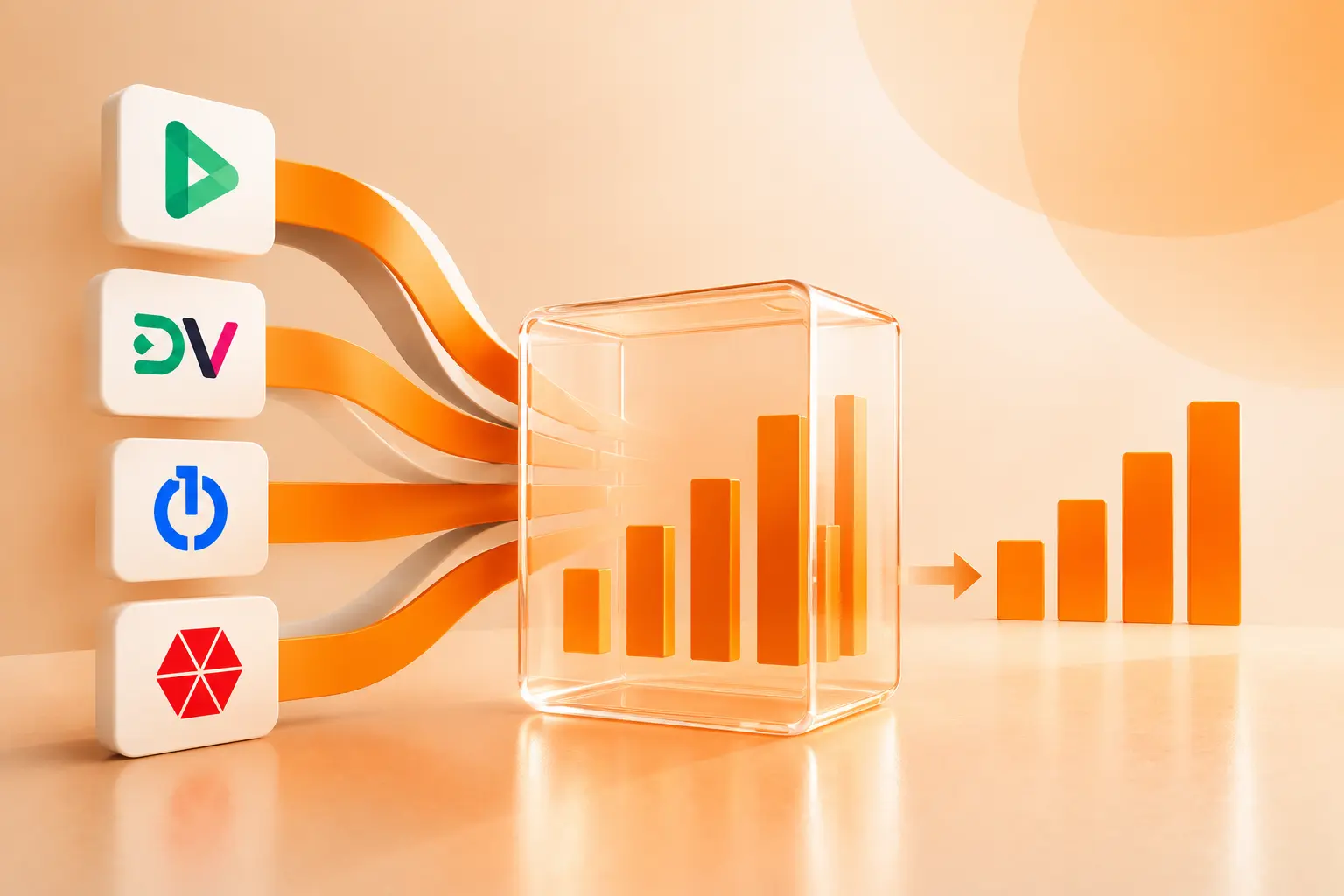
A more connected approach makes it easier to bring campaign data together, compare performance across platforms and turn media results into actionable decisions.
TL;DR
- Multi-DSP reporting is the process of consolidating campaign data from multiple demand-side platforms into a common reporting framework.
- Reporting becomes fragmented when each DSP is treated as a separate reporting environment.
- Agencies should establish common metrics, naming conventions and reporting rules before campaigns launch.
- A strong multi-DSP reporting process should connect media delivery, audience performance, conversions and business outcomes.
- Unified reporting can reduce repetitive work while giving teams a clearer view of performance across DSPs.
What Is Multi-DSP Reporting?
Multi-DSP reporting is the process of collecting, standardising and analysing campaign performance data from multiple demand-side platforms in a consolidated reporting framework.
Agencies use multiple DSPs to access different audiences, inventory and buying capabilities. Multi-DSP reporting helps them evaluate those activities together while still maintaining visibility into individual DSP performance.
The goal isn’t to eliminate DSP-level reporting. It’s to make sure DSP-level data contributes to a broader, consistent view of campaign performance.
Why Does Multi-DSP Reporting Become Fragmented?
The biggest challenge with multi-DSP reporting is that the same campaign can look different depending on which platform you are looking at.
One Demand Side Platform may organise reporting around campaigns, line items and creatives, while another may structure it differently. Metrics can also use different naming conventions or levels of granularity.
When an agency pulls these reports together manually, someone has to standardise the data before meaningful comparisons can be made.
For example, imagine a UK agency running a campaign for a retail client across two DSPs. The campaign may use display and CTV across both platforms, with different audience segments and buying strategies.
The client does not want two separate answers to the question, “How did the campaign perform?”
They want to know:
- How much did we spend?
- How many people did we reach?
- Which audiences performed best?
- Which channels delivered efficiently?
- Which DSP contributed the strongest results?
- How many conversions did the campaign generate?
- Where should we allocate the budget next?
Answering those questions requires campaign data to be brought together before the results can be properly analysed.
5 Challenges Agencies Face When Reporting Across DSPs
Managing multiple DSPs creates several reporting challenges for agencies. The most common ones are connected to data consistency, campaign organisation, manual processes and the speed at which teams can act on insights.
1. Different Metrics and Definitions
One of the biggest challenges is making sure metrics mean the same thing across platforms.
DSPs may use different definitions, calculation methods, attribution windows or levels of granularity for similar metrics. Even when platforms report metrics such as conversions, reach or engagement, agencies need to understand whether those figures can be directly compared.
A common reporting framework can help agencies establish consistent definitions for metrics such as:
- Spend
- Impressions
- Reach
- CPM
- CTR
- CPC
- Conversions
- CPA
- ROAS
- Video completion rate
The exact metrics will depend on the campaign objective, but the principle remains the same: performance should be measured consistently even when media is bought through different DSPs.
2. Different Naming Conventions
Campaigns, audiences, placements and creatives may have different names across platforms. If one DSP calls an audience “UK Retail Shoppers” and another uses a different naming structure, consolidating the results can become a manual exercise.
This becomes even more difficult when multiple traders or account managers work on the same campaign.
Agencies can reduce this problem by standardising campaign naming before launch.
For example:
Client → Campaign → Market → Channel → Audience → Creative
A consistent naming structure makes reporting easier to consolidate and gives teams a common framework for managing campaigns across multiple DSPs.
3. Disconnected Campaign Data
When campaign data sits across separate platforms, it can become difficult to understand how different parts of the media strategy are contributing to the overall result.
Performance data from one DSP may need to be combined with audience, conversion or campaign data from another before traders can see the complete picture.
This means that the information required to answer a simple campaign question may be spread across several reporting environments.
Without a connected data structure, agencies may spend more time bringing information together than analysing what it means.
4. Manual Reporting
Manual reporting becomes difficult to sustain when agencies are managing several clients, campaigns and DSPs simultaneously.
Teams may need to log into multiple platforms, export data, clean spreadsheets, standardise fields, combine reports and rebuild client-facing dashboards.
The process can become cyclical.
The team launches the campaign, exports data, cleans the data, builds the report, sends it to the client and then repeats the same process the following week.
As campaign volume increases, this repetitive work takes time away from analysis and optimisation.
5. Slow Optimisation and Client Reporting
Fragmented reporting affects both traders and account teams.
Traders need timely performance data to identify changes in audience, channel, creative or DSP performance. Account teams need reliable data to explain campaign results and demonstrate value to clients.
If teams have to wait days for reports to be consolidated, optimisation decisions can lag behind campaign performance.
A better reporting process should give internal teams the detail they need while making it easier to communicate the overall campaign outcome.
How to Build a Better Multi-DSP Reporting Framework
A strong multi-DSP reporting framework should make campaign data easier to compare, consolidate and act on. Agencies can build this framework around six key areas.
1. Establish Common KPIs
Start by defining the metrics that matter for each campaign objective.
For example, a performance-focused campaign may prioritise conversions, CPA and ROAS, while an awareness campaign may focus more heavily on reach, impressions, CPM and video completion rate.
The important thing is to establish these KPIs before campaigns launch and use consistent definitions across DSPs.
2. Standardise Naming Conventions
Campaign naming should be consistent across platforms so that data can be easily grouped and analysed.
A structure such as:
Client → Campaign → Market → Channel → Audience → Creative
can help agencies organise campaign data consistently across DSPs.
This also makes it easier to identify performance by audience, channel, creative or market without manually interpreting different naming structures.
3. Centralise Campaign Data
Agencies should have a centralised reporting environment where data from multiple DSPs can be brought together.
Instead of treating every DSP as a separate reporting destination, campaign data can be viewed within a common framework.
This gives traders access to the detail they need while allowing teams to analyse campaign performance across platforms.
4. Automate Data Collection
Automating data collection can reduce repetitive reporting work and minimise the need for manual exports, data cleaning and spreadsheet consolidation.
Agencies should look at options such as:
- Automated data collection
- APIs
- Automated data exports
- Scheduled reports
- Reusable reporting templates
The objective is simple: reporting should not depend on someone manually downloading and cleaning the same data every week.
5. Use Centralised Dashboards
Dashboards can give teams continuous visibility into campaign performance without requiring them to rebuild reports each time data changes.
A useful dashboard should allow teams to move from the overall campaign view into more detailed performance by:
- DSP
- Channel
- Audience
- Creative
- Placement
- Geography
- Campaign objective
This allows traders to identify performance trends and gives account teams a consistent source of campaign data.
6. Define the Right Attribution Approach
Attribution is another important consideration when consolidating performance across DSPs.
If different platforms use different attribution models or conversion windows, comparing conversion performance can become misleading.
Agencies should therefore establish a clear attribution approach and understand how conversions are being measured across platforms before using them to make budget or optimisation decisions.
Don’t Just Report Across DSPs — Optimise Across Them
Multi-DSP reporting shouldn’t end with a better dashboard.
The real value comes when the information in that dashboard changes how media is bought.
When agencies can view campaign performance across platforms, they can identify patterns that may not be visible when each DSP is analysed independently.
For example, an agency might identify that:
- A particular audience has a stronger CPA.
- One geography is generating stronger conversion rates.
- A specific creative is outperforming other variations.
- One channel is delivering reach efficiently but weaker conversion performance.
- One DSP is performing better for a specific campaign objective.
These insights can then inform budget allocation, audience strategy, creative rotation and bidding decisions.
The purpose of consolidating DSP data isn’t simply to create one version of the report or rank platforms from first to last. It’s to give traders a campaign-level view of what each DSP contributes and help them decide where the next dollar should go.
A DSP may be particularly valuable for reach or premium inventory, while another may be stronger for conversion-focused activity. Multi-DSP optimisation means understanding those differences rather than treating one platform as universally better than another.
The goal is to understand what each platform contributes to the overall media strategy and use that information to make better decisions.
What Should Agencies Look for in a Multi-DSP Platform?
For agencies considering a multi-DSP setup, reporting should be one of the criteria evaluated before choosing a platform.
Unified campaign reporting
Can the agency see performance across DSPs without manually combining multiple reports?
Consistent metrics
Are key campaign metrics presented using comparable definitions across platforms?
Granular performance data
Can teams analyse performance by audience, channel, creative, placement and other relevant dimensions?
Attribution options
Can the platform support the attribution model needed for the campaign?
Client-ready reporting
Can account teams turn consolidated campaign data into clear, client-ready reports?
Platforms such as Vizibl, which bring multiple DSPs and campaign reporting into a single workflow, can help agencies reduce the need to work across separate reporting environments.
The goal is to give traders access to DSP-level performance while maintaining a consolidated view for campaign analysis and reporting.
The right setup should make it easier to use multiple DSPs without creating another layer of reporting work.
5 Questions Agencies Should Ask Before Choosing a Multi-DSP Platform
1. Can we see all DSP performance in one place?
If not, understand how much manual consolidation will be required to create a complete campaign view.
2. Are our KPIs consistent across platforms?
Make sure the same definitions and measurement approaches are being used before comparing results.
3. Can we identify what is driving performance?
A total campaign number is useful, but agencies also need audience, channel, creative and DSP-level insights to understand what is driving results.
4. How quickly can we turn reporting into optimisation?
If reporting takes days to consolidate, campaign decisions will always lag behind performance.
5. Can we give clients a clear view of the campaign?
The platform should make it easier to explain campaign performance rather than simply reproduce data from individual DSP dashboards.
Frequently Asked Questions
What is multi-DSP reporting?
Multi-DSP reporting is the process of collecting and analysing campaign performance data from multiple demand-side platforms in a consolidated view. It allows agencies to understand both individual DSP performance and overall campaign results.
Why is DSP reporting fragmented?
DSP reporting becomes fragmented because each demand-side platform has its own interface, reporting structure, metrics and data organisation. Agencies using several platforms therefore often need to combine data before they can analyse total campaign performance.
How can agencies reduce fragmented reporting?
Agencies can reduce fragmented reporting by standardising campaign structures, defining common KPIs, automating data collection and using a platform that provides unified reporting across DSPs.
Should agencies report each DSP separately to clients?
DSP-level performance can be useful when explaining optimisation decisions, but clients will usually benefit from a consolidated campaign view alongside the relevant DSP-level detail.
What is the difference between DSP reporting and programmatic reporting?
DSP reporting typically focuses on performance within an individual platform. Programmatic reporting can provide a broader view of campaign activity across platforms, channels, audiences and outcomes.
The Next Step for Multi-DSP Programmatic
Using multiple DSPs can give agencies greater access to audiences, inventory and buying capabilities. But as the number of platforms grows, so does the need for a reporting approach that connects them.
The answer isn’t necessarily to use fewer DSPs. It’s to make the data from those platforms easier to bring together, compare and act on. With consistent KPIs, standardised campaign structures, centralised data and automated reporting, agencies can spend less time reconciling reports and more time understanding what is driving performance.
More importantly, connected reporting gives traders the visibility to optimise across the entire campaign rather than making decisions based on isolated DSP results.
The next step for multi-DSP programmatic is a more connected approach to campaign data, giving agencies the visibility they need to make smarter media decisions across platforms.