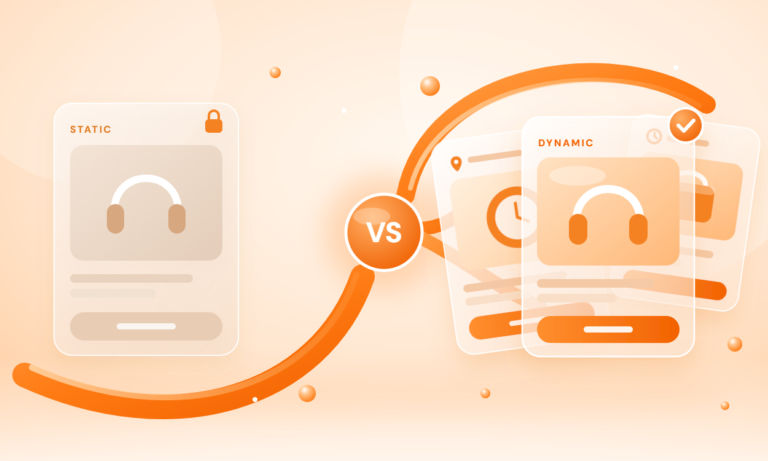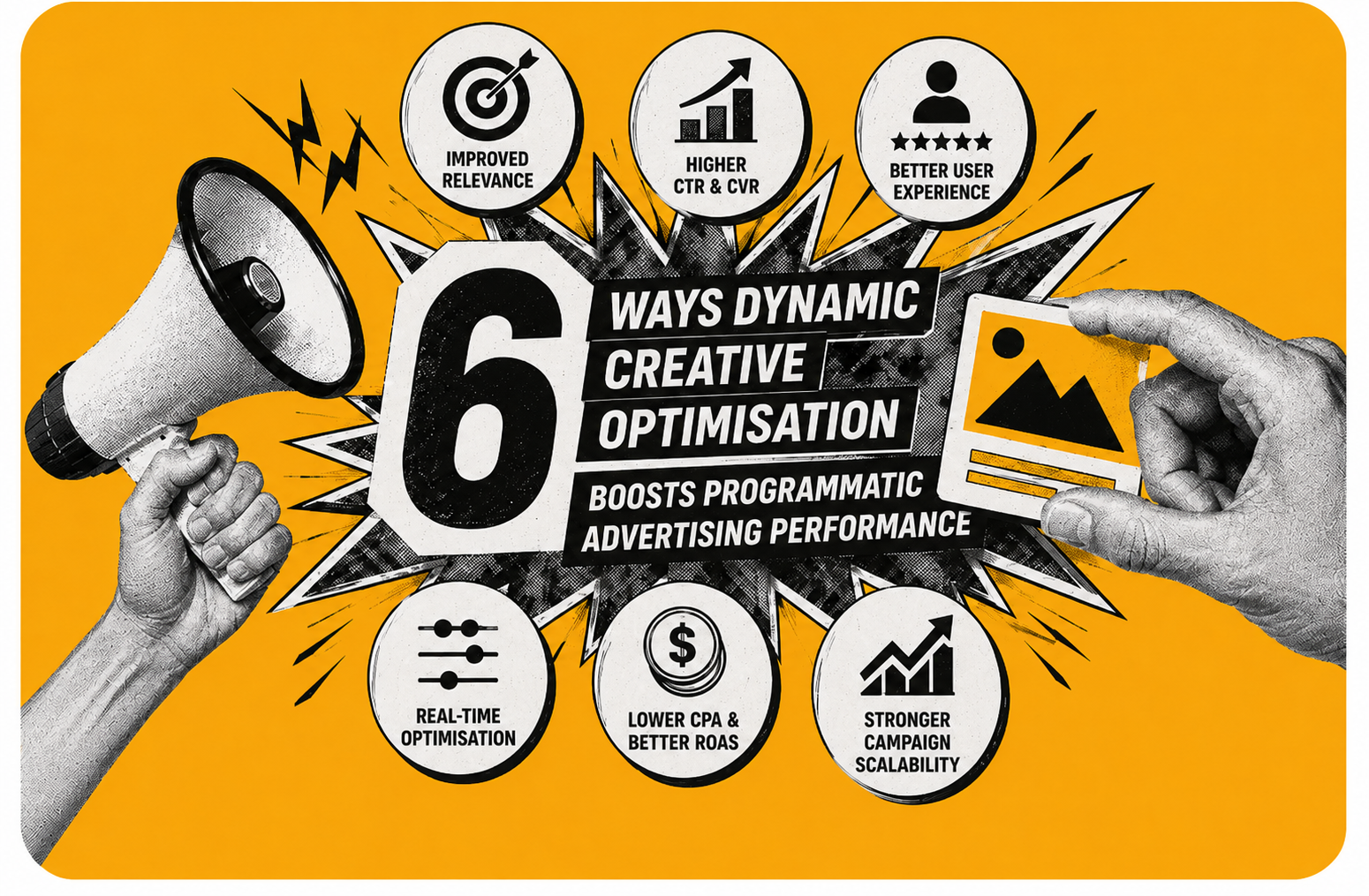
Programmatic advertising has nailed the hard parts. Be it scale, targeting, timing, a well-optimised campaign knows exactly who to reach, when to show up, and where your ads will land.
But performance still slips where it matters most: the message itself.
Because while programmatic can get the right ad in front of the right person, it often shows the same ad to everyone. And that’s where relevance breaks. The same ad creative repeated or missing the retargeting window because creatives take time to build, both end up affecting your campaign negatively.
That’s the gap Dynamic Creative Optimisation (DCO) is built to close.
Instead of treating creative like a fixed asset, DCO turns it into a live variable creative that can adapt messaging, visuals, and CTAs in real time based on who’s viewing the ad. It brings creative into the same optimisation loop as targeting and bidding, so performance compounds.
And this isn’t theoretical anymore. Platforms like Vizibl are already embedding DCO directly into programmatic workflows, making creative just as accountable to performance as the media behind it.
Benefits of Using Dynamic Creative Optimisation (DCO)
1. Improves Ad Relevance With Real-Time Personalisation
Relevance is the most immediate driver of display advertising performance.
Dynamic Creative Optimisation evaluates signals such as browsing behaviour, page context, device type, and time of day to assemble a creative that fits the moment. This is what enables real-time ad personalisation.
For example, someone casually browsing sees a different message than someone who has already shown intent. The result is higher engagement because the ad feels more relevant.
2. Aligns Creative With User Intent
Most programmatic campaigns rely on predefined audience assumptions. DCO replaces those assumptions with observed behaviour.
A user exploring products sees discovery-led messaging, while a high-intent user sees conversion-focused creatives. This alignment between user intent and ad creative improves the likelihood of action.
The creative is no longer built for a broad audience but it is assembled for each impression.
3. Improves CTR, CPC, and Conversion Rates
Performance metrics in programmatic campaigns are closely connected.
More relevant ads lead to higher click-through rates. Increased engagement improves platform signals, which can lower cost per click. More qualified traffic results in better conversion rates.
DCO improves all three by increasing the effectiveness of each impression and not just the volume.
4. Enables Continuous Creative Optimisation at Scale
Traditional creative optimisation relies on limited A/B testing. DCO replaces this with continuous, real-time optimisation.
Instead of testing entire creatives, it evaluates combinations of elements such as headlines, images, and calls-to-action. The system learns which combinations perform best and automatically prioritises them.
This creates a continuous optimisation loop where campaign performance improves as the campaign runs.
5. Reduces Wasted Ad Spend
A large portion of programmatic ad spend is wasted on impressions that are technically correct but contextually irrelevant.
Dynamic Creative Optimisation reduces this waste by aligning creatives with user behaviour and context. It avoids mismatches such as showing low-intent messaging to high-intent users or repeating the same creative too frequently.
As a result, more of the budget is spent on impressions that are likely to drive outcomes.
6. Prevents Creative Fatigue in Display Advertising
Creative fatigue is a common issue in display advertising campaigns, where repeated exposure to the same ad leads to declining engagement.
DCO solves this by mixing and matching different parts of an ad like headlines, images, and CTAs in real time. Even when the same assets are used, the way they are combined changes across impressions, so the ad doesn’t feel repetitive.
How DCO Makes These Improvements in Real Time
The improvements driven by DCO come from how decisions are made at the moment of each impression.
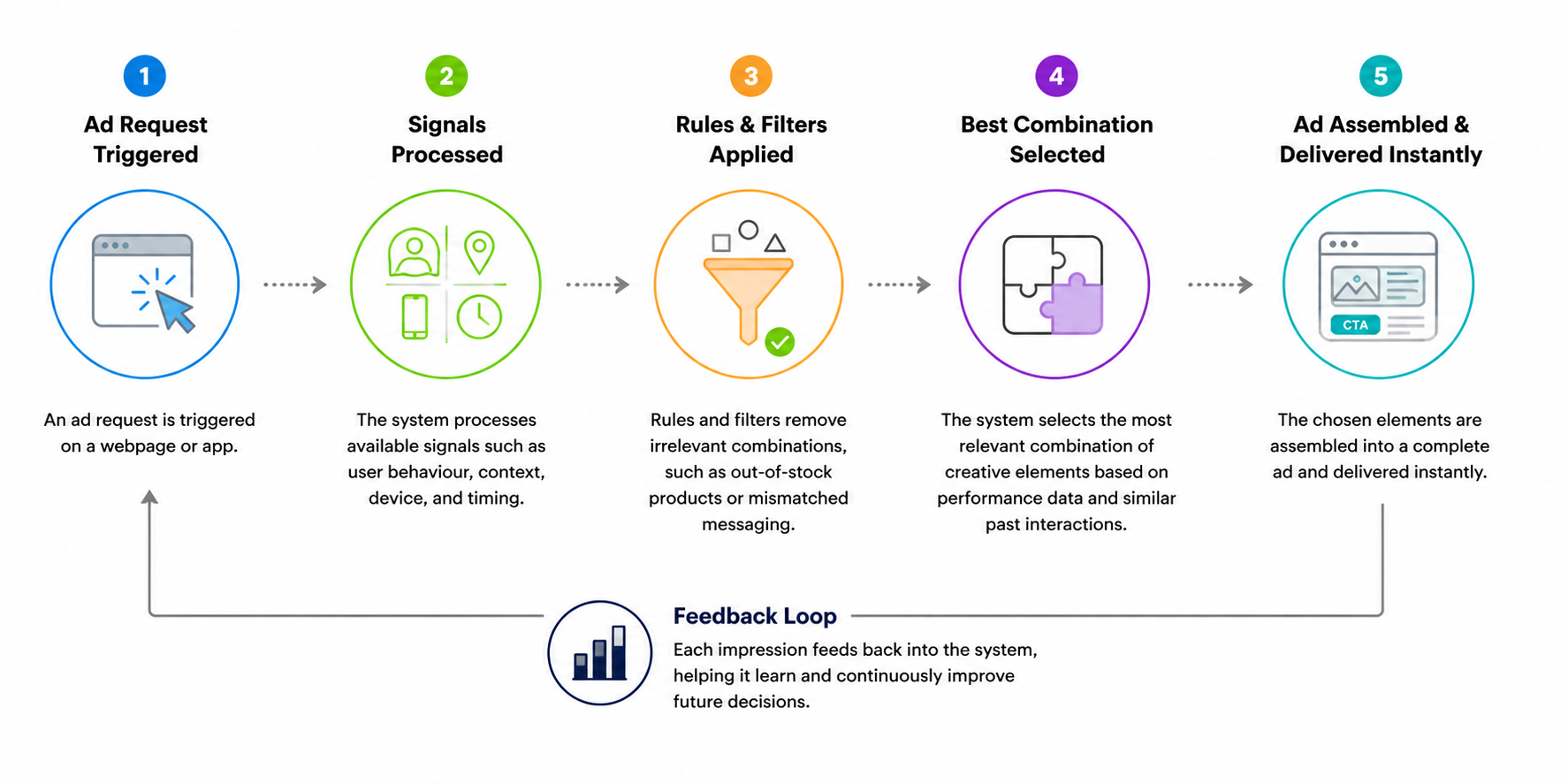
When an ad request is triggered, the system processes available signals such as user behaviour, context, device, and timing. It then applies rules and filters to remove irrelevant combinations, such as out-of-stock products or mismatched messaging.
From there, the system selects the most relevant combination of creative elements based on performance data and similar past interactions. The chosen elements are assembled into a complete ad and delivered instantly.
Each impression feeds back into the system, allowing it to continuously learn which combinations perform best and refine future decisions.
This is what allows DCO to move beyond static optimisation and continuously improve programmatic campaign performance over time.
The Impact of Dynamic Creative Optimisation on Programmatic Performance
DCO improves programmatic performance by making each impression more intentional. It increases engagement through better relevance. It improves efficiency by reducing wasted impressions. It drives stronger results by aligning ad creative with user intent.
Instead of relying on fixed messaging, campaigns adapt in real time. Different users see different creatives. Different moments trigger different messages.
What stays consistent is the outcome: higher engagement, improved efficiency, and stronger programmatic campaign performance.
As programmatic advertising becomes more automated and data-driven, creative can no longer remain static. The ability to optimise messaging in real time is becoming just as important as optimising targeting and bidding. And that is where Dynamic Creative Optimisation changes the role of creative entirely, from a fixed asset into an active part of programmatic performance.