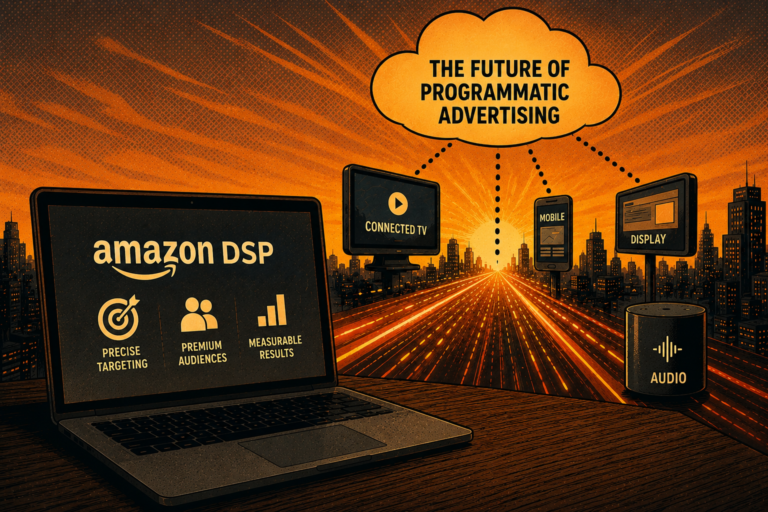
Advertisers have never had more ways to reach their audiences. Between CTV, display, retail media, audio, social platforms, and digital out-of-home, the opportunities within programmatic advertising continue to expand.
Yet despite the growing number of channels, many advertisers are facing a surprisingly familiar challenge: campaigns that reach the right audiences but fail to create meaningful momentum.
TL;DR
- Marketing orchestration connects audience data, creative, media activation, and measurement into a unified customer journey.
- Many programmatic campaigns underperform because channels, messaging, and performance are managed in silos rather than as part of a connected experience.
- The biggest challenge in programmatic advertising today is no longer targeting audiences but coordinating touchpoints across the customer journey.
- High-performing brands focus on customer progression, ensuring each interaction builds on the last rather than treating campaigns as isolated executions.
- As programmatic advertising matures, competitive advantage is shifting from better delivery and targeting to better orchestration and campaign alignment.
What Is Marketing Orchestration in Programmatic Advertising?
Marketing orchestration is the process of connecting audience data, creative messaging, media buying, and measurement into a unified customer journey across channels.
Instead of running isolated campaigns, orchestration makes sure that every interaction builds on the last. The goal is to create a more connected experience that moves customers from awareness to action in a deliberate and coordinated way.
Why Do Programmatic Campaigns Still Feel Disconnected?
For many advertisers, the issue isn’t a lack of channels, targeting capabilities, or audience data. It’s a lack of coordination.
Programmatic campaigns often feel fragmented because:
- Channels are planned and optimised in silos
- Messaging doesn’t evolve across touchpoints
- Frequency isn’t coordinated across platforms
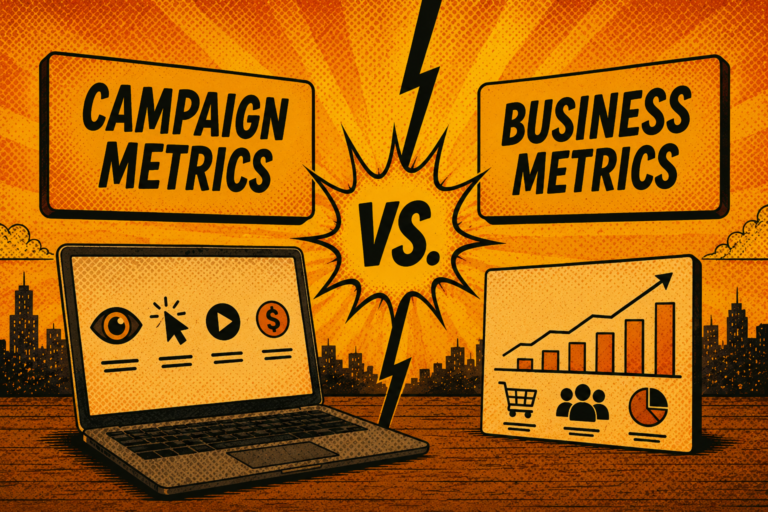
- Measurement focuses on channel performance rather than customer progression
In many cases, every campaign is doing its job. A CTV campaign is driving awareness. A display campaign is generating engagement. Retargeting is bringing users back to the site.
The problem is that these efforts are often planned, measured, and optimised independently. From an advertiser’s perspective, they’re separate campaigns. From a consumer’s perspective, they’re all part of the same journey.
In short, targeting is no longer the biggest challenge. Orchestration is.
The industry has spent years refining audience targeting. Brands can activate first-party data, build sophisticated audience segments, and optimise bids in real time. But while targeting capabilities have evolved dramatically, the way campaigns work together often hasn’t.
And that’s where marketing orchestration becomes important. The brands seeing the strongest results today aren’t necessarily reaching more people. They’re doing a better job of ensuring every touchpoint supports the next.
Programmatic Advertising Has Solved Delivery, Not Coordination
One of the biggest advantages of programmatic advertising is its ability to deliver ads efficiently at scale.
Today’s advertisers can reach highly specific audiences across premium inventory, automate media buying decisions, and optimize toward business outcomes with remarkable precision.
But efficiency doesn’t automatically translate into effectiveness.
A campaign can achieve its targeting goals and still create a disconnected experience for consumers.
For example, a prospect is exposed to a CTV ad that introduces your brand. A few days later, they see a display ad focused on a completely different value proposition. Then they’re retargeted with a conversion-focused message before they’ve shown any meaningful buying intent.
Each campaign may be performing exactly as intended within its own channel.
The problem is that nobody is thinking about how those touchpoints connect.
This is one of the biggest gaps in modern programmatic campaigns. Advertisers are optimising individual channels while consumers experience a single journey.
Why Omnichannel Advertising Is Still Fragmented
The term omnichannel advertising has become a staple of marketing conversations.
In theory, it describes a seamless experience across channels. In practice, many omnichannel campaigns are simply multiple campaigns running at the same time.
Consumers don’t think in channels.
They don’t separate their experiences into CTV, display, mobile, desktop, and retail media. They move between platforms naturally, often interacting with a brand several times before making a decision.
Yet advertisers frequently plan, execute, and measure campaigns within channel-specific silos.
The result is a fragmented experience where messaging overlaps, creative becomes repetitive, and frequency spirals beyond what is actually useful.
When this happens, campaign performance suffers not necessarily because the targeting is wrong, but because the experience lacks coordination.
Marketing orchestration addresses this challenge by shifting the focus from channel performance to customer progression.
Instead of asking how each channel performs individually, advertisers begin asking a more valuable question: How is each touchpoint helping move a customer closer to a decision?
The Gap Between Audience Targeting and Customer Experience
When campaign performance declines, the instinctive reaction is often to refine audience targeting.
Marketers look for new data sources. They create additional segments. They experiment with new targeting signals.
Sometimes that’s the right move. But increasingly, the issue isn’t who advertisers are reaching.
It’s what happens after they reach them. A highly targeted campaign with generic messaging remains generic.
Likewise, repeatedly showing the same creative across multiple environments doesn’t create relevance. It creates fatigue.
The brands generating stronger outcomes today are thinking beyond audience acquisition. They’re thinking about audience progression.
-What message should someone see during their first interaction?
-How should that message evolve after engagement?
-At what point should a promotional offer be introduced?
-How can creative adapt based on previous touchpoints?
These questions sit at the core of marketing orchestration, yet they’re often absent from programmatic media planning discussions.
What Advertisers Are Missing in Their Programmatic Campaigns
For years, the industry has focused on delivering the right ad to the right person at the right time. That’s still important.
But the next phase of programmatic advertising is less about individual impressions and more about connected experiences.
The most successful advertisers are no longer treating campaigns as isolated executions. They’re building systems that connect audience insights, creative strategy, media buying, and measurement.
This creates a more intentional customer journey. Awareness campaigns generate familiarity. Consideration campaigns build confidence. Performance campaigns encourage action.
Each stage serves a purpose and supports the next.
Without orchestration, these moments often exist independently. With orchestration, they become part of a larger narrative.
And that’s where much of the untapped value in programmatic advertising exists today.
Why Marketing Orchestration Matters for Modern DSPs
As advertisers gain access to more inventory sources and audience signals, campaign management becomes increasingly complex.
This complexity has created a growing need for platforms that don’t simply facilitate media buying but help coordinate it.
A modern self-serve DSP should do more than provide access to inventory. It should enable advertisers to connect audience data, campaign insights, and performance metrics across channels.
The goal here is campaign alignment. When advertisers can view performance holistically, manage audiences across channels, and build more connected customer experiences, they gain a significant advantage over competitors that continue operating in silos.
This is where marketing orchestration shifts from a strategic concept to a practical capability.
Marketing Orchestration Is the Next Evolution of Programmatic Advertising
Programmatic advertising has come a long way from its origins as an automated buying solution. Today, it sits at the centre of how brands connect with consumers across an increasingly fragmented media landscape.
But as channels multiply and customer journeys become more complex, success will depend on more than targeting precision and automation.
Programmatic advertising has spent years solving for efficiency. Better targeting. Faster optimisation. Smarter bidding. But as the ecosystem matures, efficiency alone is becoming less of a differentiator. Most advertisers have access to similar audience data, similar inventory, and similar automation capabilities.
The bigger challenge now is making all of those elements work together.
Reaching the right audience is important. But if the messaging is inconsistent, the creative lacks context, or every channel operates independently, even the best targeting can only take a campaign so far.
That’s why marketing orchestration is becoming increasingly important. It gives advertisers a way to connect audience strategy, creative, media activation, and measurement into a more deliberate customer journey.
Most advertisers already have the tools to reach their audiences. The real opportunity lies in connecting the touchpoints that influence decisions along the way.
Because the brands that create momentum aren’t always the ones spending more or targeting better. They’re the ones ensuring every interaction has a purpose and builds on the last.