Three people live in three different UK cities. One watches cricket in Hindi. One follows Punjabi creators on YouTube. One switches between English and Urdu content every day.
To most media plans, they’re simply “UK adults.”
And that’s the problem.
“Multicultural audience” is a term that appears in almost every UK marketing deck, but it often gets treated as a broad demographic rather than a distinct audience. In reality, it includes South Asian, Black, East Asian, and mixed-heritage communities who may not see themselves reflected in mainstream English-language campaigns.
Within this group, South Asian audiences, including people of Indian, Pakistani, Bangladeshi, and Sri Lankan heritage, are the largest and fastest-growing segment. For media buyers and adtech professionals, this isn’t a niche audience or a CSR talking point. It’s a measurable, data-backed audience with distinct media habits, language preferences, and purchasing power that many programmatic and linear campaigns still don’t target with much precision.
TL;DR
- The UK’s Asian or Asian British population reached 9.3% of England and Wales, making it the second-largest ethnic group after White British. Indian-heritage residents alone account for 3.1% of the population, or roughly 1.9 million people.
- The British Indian population has crossed 2 million, making it the UK’s largest visible ethnic minority group.
- Multicultural households contribute an estimated £320B+ annually to the UK economy. This is a significant market that brands can easily underweight when planning their media budgets.
- South Asian audiences are concentrated in places such as London, Leicester, Birmingham, and Bradford. For media buyers, this means precision geo-targeting can be more useful than relying only on broad national buys.
- Language, religion, and cultural calendar moments such as Diwali, Eid, and Navratri can change what relevant creative looks like for this audience. Generic English-only campaigns can therefore miss opportunities to improve both reach and relevance.
What does “multicultural audience” mean in UK advertising?
In UK adtech and media planning, “multicultural audience” typically refers to non-White British ethnic groups, mainly South Asian, Black British, East Asian, and mixed-heritage consumers. These audiences are often served the same creative and channel mix as the wider population, even though they can have different language preferences, media habits, and cultural touchpoints.
The term has largely replaced the older “BAME” (Black, Asian and Minority Ethnic) label in industry usage. However, official statistics still report populations by individual ethnic categories rather than putting everyone into one “multicultural” group.
How many people in the UK identify as South Asian or Indian?
According to the 2021 Census, people from Asian ethnic groups made up 9.3% of the England and Wales population. This was the second-largest share after White British at 74.4%.
Within the Asian category, Indian-heritage residents were the largest single non-White group, accounting for 3.1% of the population. The British Indian community specifically has grown beyond 2 million people, making it the largest visible ethnic minority population in the country.
When Pakistani, Bangladeshi, and other South Asian heritage groups are included, the combined South Asian population is close to 5.5–5.8 million people across the UK.
Where in the UK is this audience concentrated?
South Asian populations are concentrated in specific metropolitan areas rather than being evenly spread across the country. London has the largest absolute numbers, followed by cities such as Leicester, Birmingham, Bradford, Bolton, Slough, Coventry, and Wolverhampton.
Many of these cities have long-established Indian, Pakistani, and Bangladeshi communities that developed through migration from the mid-20th century onwards.
For media buyers running geo-targeted or DOOH (digital out-of-home) campaigns, this concentration creates a useful targeting opportunity. Instead of treating the UK as one large audience, buyers can focus spend on areas with higher concentrations of their target audience. A national campaign can otherwise spend money in areas where multicultural audience density is relatively low, while a smaller group of postcodes may contain a much larger share of the intended audience.
How much spending power does this audience represent?
Multicultural households contribute an estimated £320B+ annually to the UK economy. This can be a commercial risk for brands that fail to represent these audiences authentically in their creative.
This spending is also not evenly distributed across categories. South Asian households have historically indexed higher than the national average in areas such as gold and jewellery, weddings, home ownership, education, and international remittances. These are important and often high-value categories for finance, travel, and retail advertisers.
Does language matter, or is English enough?
Language is one of the areas that mainstream campaigns can overlook when targeting this audience.
Most UK-born South Asians are fluent English speakers. However, first- and second-generation households can also consume media in Hindi, Punjabi, Gujarati, Urdu, or Bengali alongside English. This is particularly common for entertainment, religious content, and family communication.
Ethnic-language TV channels, WhatsApp community groups, and vernacular YouTube and streaming content remain part of the media mix, including among English-fluent, UK-born audiences.
This means an English-only campaign can still reach the audience, but it may not create the same level of cultural connection as creative that uses bilingual or vernacular language where appropriate.
Why do generic campaigns underperform with multicultural audiences?
Research into representation shows that audiences can respond differently to creative that reflects their community compared with creative that treats them as a general audience.
Kantar’s research found that 53% of UK consumers say a brand’s diversity and inclusion efforts influence their purchase decisions. This rises to 66% among Black Britons. Separately, ethnic minorities were at least ten percentage points more likely than average to say they felt poorly represented or discriminated against by brands.
For media buyers, the practical point is simple: reach alone does not guarantee relevance. Showing an ad to a multicultural household without adapting the creative to relevant cultural or language preferences may produce weaker engagement and brand recall than using more segmented creative.
What role do cultural calendar moments play?
Diwali, Eid al-Fitr, Eid al-Adha, Navratri, Vaisakhi, and Bengali New Year are important commercial moments for South Asian communities in the UK. Within their respective audiences, these occasions can create significant retail and spending activity, similar to the role Christmas or Black Friday plays in the wider market.
Retailers, telecom brands, and fintech companies are increasingly creating campaigns around these dates. However, the opportunity remains relatively underused compared with the level of investment mainstream advertisers put into Christmas campaigns.
For programmatic buyers with access to first-party or contextual data, these occasions can be treated as seasonal targeting opportunities, just as they would approach other major retail calendar events.
How can media buyers actually target this audience with adtech tools?
There are several ways media buyers can approach multicultural audience targeting.
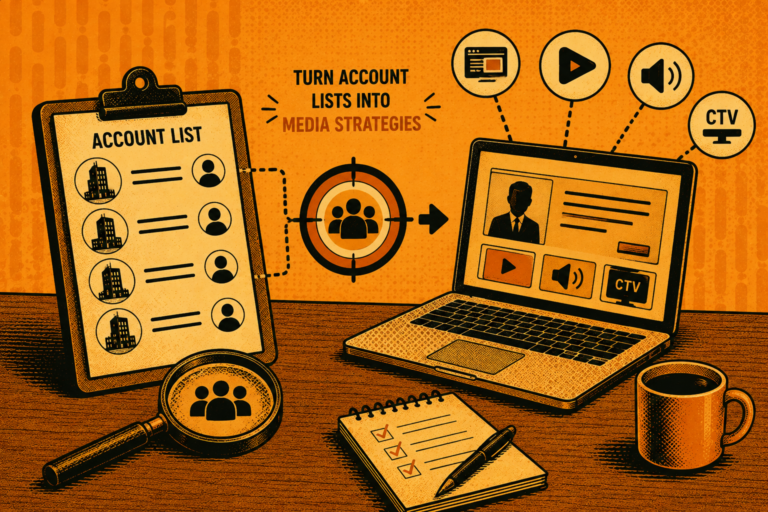
One is geo-targeting by postcode density, using ONS ethnicity data as a planning layer. Another is contextual targeting against South Asian-language or diaspora-focused publishers and YouTube channels.
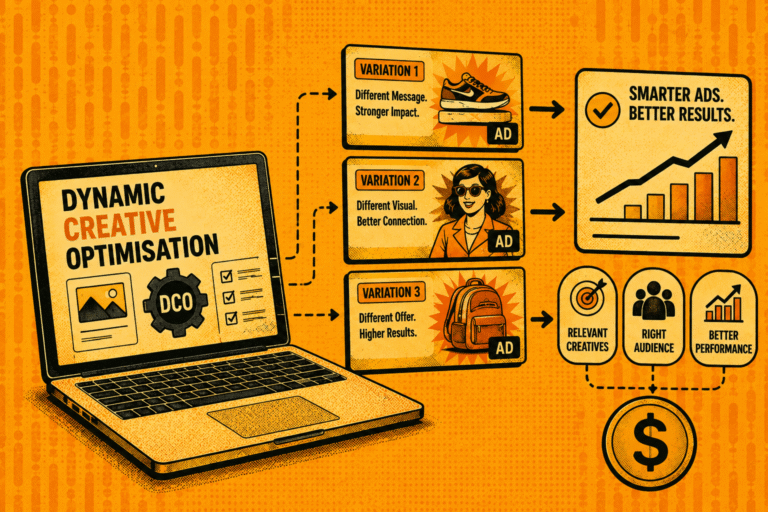
Buyers can also use language-based creative variants that are served programmatically. Where suitable first-party data is available, lookalike modeling can help advertisers find new audiences that resemble their existing multicultural customer segments.
Connected TV and addressable OOH have also made this type of targeting more practical in recent years. Both formats can support more specific geographic and content-adjacency targeting than traditional linear TV buys.
Is this a growing or shrinking opportunity?
The available census trend shows growth. The Asian or Asian British population share increased from 7.5% of England and Wales in 2011 to 9.3% in 2021.
Overall, 18% of the England and Wales population now identifies as Black, Asian, mixed, or another ethnic group, up from 13.8% a decade earlier.
Migration patterns, birth rates, and continued Indian-UK trade and education links are among the factors shaping this population trend. The available data therefore points to a market that is continuing to grow rather than remaining static.
FAQs
Is “South Asian” the same as “Indian” in the UK context?
No. South Asian is an umbrella term that includes Indian, Pakistani, Bangladeshi, Sri Lankan, and Nepali heritage populations. Indian is the largest single group within this broader category.
What’s the difference between “BAME” and “multicultural” in marketing?
BAME is an older UK government and statistical acronym that is now largely retired. “Multicultural” is more commonly used in current marketing and media industry discussions.
Which UK cities have the largest South Asian populations?
London, Leicester, Birmingham, Bradford, and Slough consistently have some of the largest South Asian populations by both absolute numbers and population share.
Do South Asian audiences in the UK mostly consume English-language media?
Mostly yes, but vernacular-language content in Hindi, Punjabi, Gujarati, Urdu, and Bengali is also actively consumed alongside English. This is especially relevant for entertainment, religious content, and family communication.
Is targeting multicultural audiences just a diversity initiative, or does it have commercial ROI?
It can have a clear commercial role. Kantar’s research connects inclusive representation with purchase decisions, while its data on consumer spending shows the size of the market. For advertisers, multicultural targeting can therefore be considered as part of audience and media planning rather than only as a diversity initiative.
Final Takeaway
The UK’s multicultural audience, with a South Asian population that has grown significantly and a British Indian population of more than 2 million, is a substantial audience rather than a fringe segment. It is also geographically concentrated, linguistically diverse, and represents significant consumer spending.
For media buyers and adtech professionals, the opportunity goes beyond creating more diverse creative. It means applying the same level of planning and targeting used for other valuable audience segments: using geo-targeting, language variants, relevant contextual signals, first-party data, and cultural-calendar moments where they make sense.
The goal is to make sure the campaign reaches the right multicultural audiences and gives them creative that feels relevant to the context in which they see it.