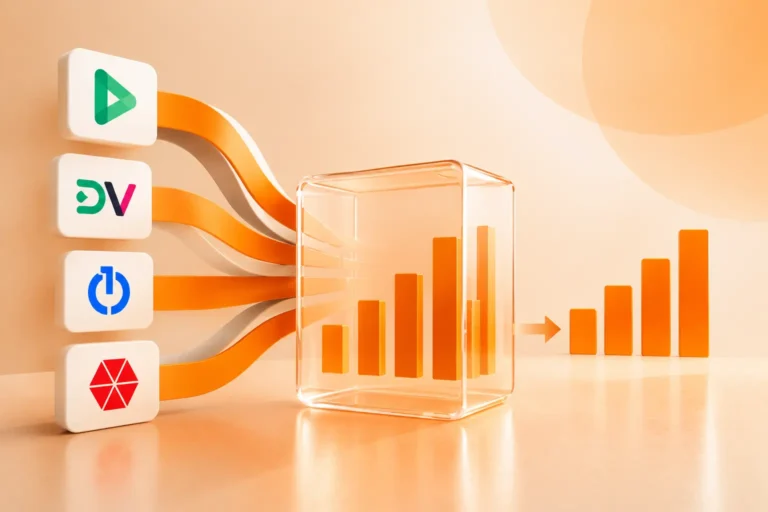
Every December, a familiar dashboard appears. Impressions climb, the client is pleased, and nobody asks whether those impressions are going to new people or to the same shoppers for the eleventh time.
That question is the whole job during the festive rush. Brands want visibility fast, prices rise, and the audiences that matter most get saturated early. This guide is for agency planners and buyers running Christmas campaigns across display, online video and CTV. It covers what to measure, how to set frequency by stage, how to manage overlap across channels, and how to decide where the next pound goes.
TL;DR
- Impressions = reach × frequency. A rising impression count can hide the fact that reach has stalled.
- Set frequency by funnel stage, not once for the whole campaign. A first-time prospect and a returning basket-abandoner need different exposure.
- Manage frequency across channels. Platform-level caps can’t see each other, so one shopper can be over-served without any single report showing it.
- Use incremental reach to decide where the next pound goes. Ask how many new people it will reach, not how many impressions it will buy.
- Review weekly from the start of the campaign. Prices, saturation and intent all change through Q4.
Why is Q4 different for UK media planners?
Everyone is buying at once. UK advertisers committed £12.9 billion to media in Q4 2025, up 8.0% year on year and the strongest quarterly growth of the year, according to the AA/WARC Expenditure Report (April 2026). Growth was led by retail media (+30.5%), addressable TV (+26.9%) and social media (+22.0%). Retailers, FMCG, travel and financial services all compete for the same shoppers at the same time.
Prices and saturation move. As demand builds towards Black Friday and the final weeks, the audiences you most want get more expensive, and frequency against them climbs faster.
The calendar is short and fixed. Black Friday is 27 November and Cyber Monday is 30 November this year, and we all know when Christmas arrives. Retailers also work back from last-order and postage dates. Messages that work in October don’t work in the final week.
Some categories face extra limits. UK restrictions on advertising identifiable less healthy food and drink, a 9pm TV watershed and a ban on paid online ads, have been in force since 5 January 2026 and apply to many FMCG clients (Source: UK Government, Department of Health and Social Care). Brand-only advertising is exempt, but product advertising has fewer permitted environments, which makes overlap and saturation more likely.
What Is the Difference Between Reach and Frequency?
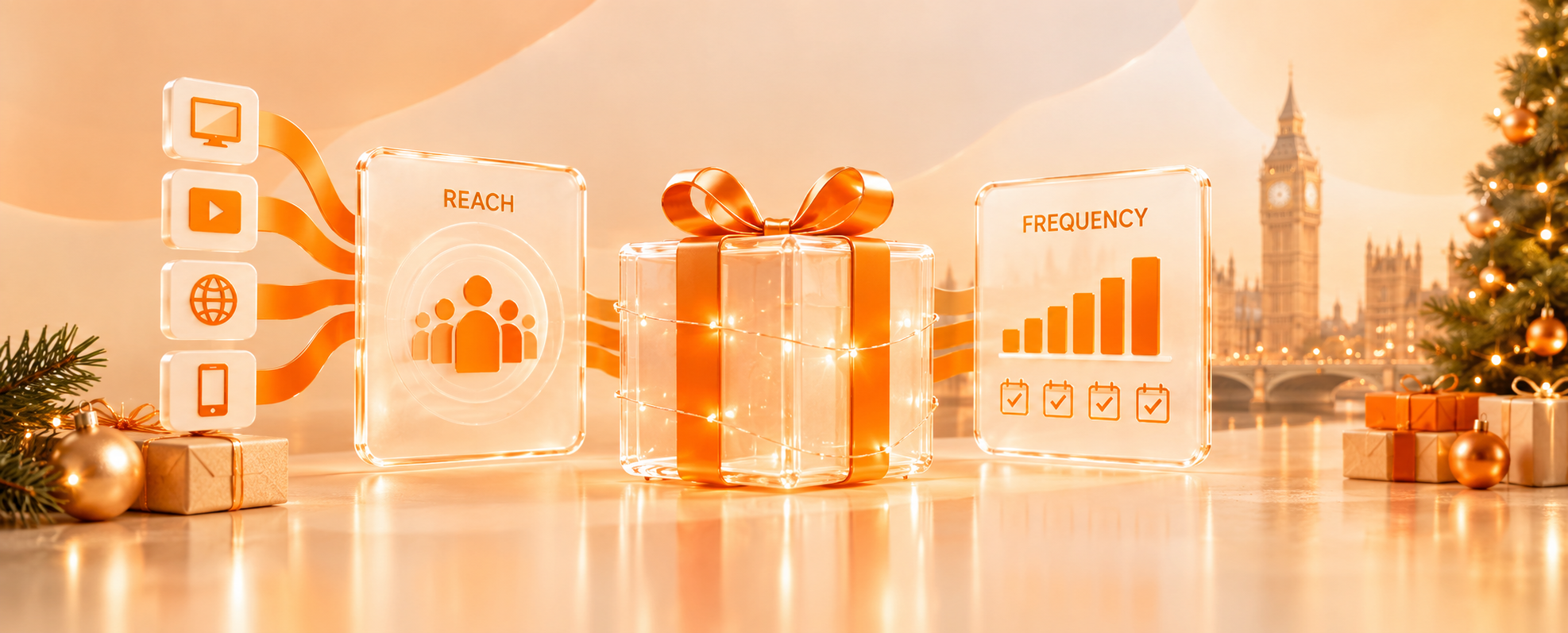
Reach counts unique people. Frequency is how many times, on average, they see the ad. A campaign that reaches 500,000 people at an average frequency of four delivers about two million impressions.
The average hides the spread. In that same campaign, a large share of people may have seen the ad once while a small group has seen it fifteen times. Check the frequency distribution, not just the average. Over-served users inflate the number while many people stay under-exposed.
Different objectives want different balances. Awareness work leans towards reach. Consideration and conversion work can justify more repeat exposure to people who have already shown interest.
Why Is Balancing Reach and Frequency Harder at Christmas?
One shopper can see your brand on CTV in the evening, in a video on their phone on the commute, and in display ads on a laptop the next day. Each platform reports its own frequency. The shopper experiences one campaign.
Christmas makes this worse. Shared households, gift research across several devices and short deadlines all raise the odds that the same person is hit from several directions.
Without a combined view, you can be hitting your frequency cap in every channel and still over-serving the same people overall.
How Should UK Agencies Decide Which Audiences to Prioritise?
Stop treating Christmas shoppers as one audience. Someone researching gifts in October has different intent from someone hunting for a last-minute present in December, and a loyal customer needs a different approach from someone meeting the brand for the first time.
Segment by relationship with the brand, intent and timing, then set exposure to match.
| Phase | Typical window | Goal | Audience focus | Frequency stance | Message |
| Build | October to mid-November | Reach new people | Prospects, lookalikes, broad interest | Lower, spread wide | Festive brand or gift-idea messaging |
| Peak | Mid-November to mid-December, including Black Friday and Cyber Monday | Convert interest | Engaged users, site visitors, existing customers | Moderate, rising for high-intent groups | Products and offers |
| Final push | Last-order dates to Christmas Eve | Close the sale | Clear purchase intent, basket abandoners | Higher, with strict limits | Urgency, delivery and last-order dates |
Adjust the windows to each client’s trading calendar.
How Do You Manage Frequency Across Channels?
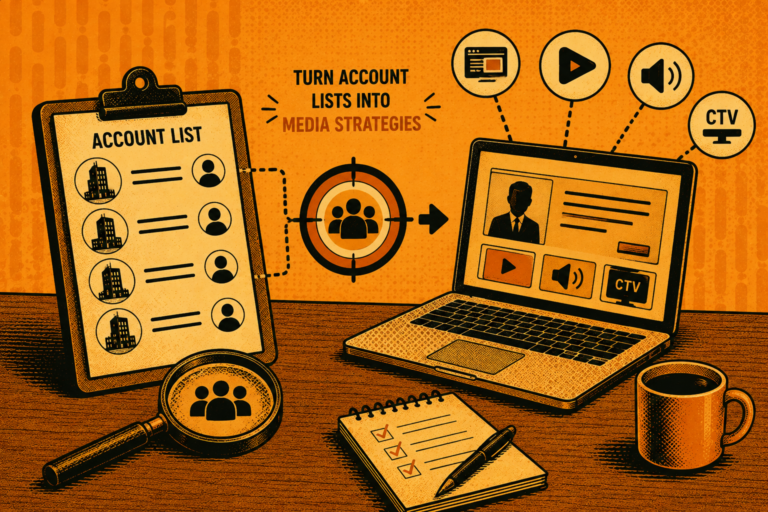
Give each channel a defined job, then check where they overlap.
- CTV: broad, high-impact reach and big-screen creative.
- Online video: extending reach to people who aren’t heavy TV or CTV viewers.
- Display: consideration, product reminders and retargeting.
The mix changes by campaign, but every channel needs a reason to be in the plan. If one audience is already receiving heavy video exposure, putting more display spend against the same people adds frequency without adding much reach. That is a cue to look at different audiences.
Measuring overlap is the hard part. Each DSP can only cap the impressions it serves, so if CTV runs through one platform and display through another, the same shopper can be over-served without either one seeing it.
Where possible, run display, online video and CTV through one DSP, so a single household-level cap covers every channel. If the plan uses more than one:
- Give each DSP a separate audience or channel, so they aren’t bidding for the same people.
- Use one independent ad server across all DSPs to see de-duplicated reach and frequency in one place.
- Use log-level data or a clean room to analyse overlap and link exposure to sales. This needs a common identifier across platforms and takes time to set up, so it suits post-campaign or periodic analysis rather than weekly optimisation.
- Agree caps with publishers on programmatic guaranteed (PG) and private marketplace (PMP) deals, so the publisher’s cap and yours don’t stack.
No method links every device, because consent and identifier loss limit matching in the UK. Report clearly what is de-duplicated and what is estimated.
How Should You Use Frequency Caps?
A cap is a safeguard, and should not be mistaken for strategy. A level that suits the awareness phase can be wrong in December, when intent is higher and the window is closing.
Review caps against reach and performance:
- Audience hits its cap quickly and incremental reach is available elsewhere? Move the budget to a wider audience.
- Frequency is low but conversion is strong? Don’t cut exposure to hit an arbitrary target.
- Frequency is high and results are flat? Add creative variants or reduce exposure.
What Role Does CTV Play in a Christmas Plan?
CTV brings big-screen, high-impact video, and demand is growing: AA/WARC reports that addressable TV spend, which includes BVOD and other connected formats, rose 37.0% in 2025. Adding it shouldn’t mean adding another stream of impressions.
Check whether CTV is reaching people you aren’t already reaching through other video and display. If the same households are getting heavy exposure everywhere, you are buying frequency, not reach. CTV also often costs more per thousand than display, so the extra reach has to justify the premium.
Creative needs to suit the screen. A display ad cropped into a video slot won’t do.
How Can Creative Make Frequency More Effective?
Repeating the same ad wears it out. Repeating a sequence of ads that move the person forward doesn’t.
A simple sequence for Christmas:
- Introduce the brand with a broad festive message.
- Show a relevant product or category.
- Prompt with an offer or deadline, such as a last-order date.
Dynamic creative optimisation (DCO) makes this practical. It adapts products, offers, location or timing to the viewer, so someone browsing gift ideas sees something different from someone who has already viewed a product page.
Media and creative need to be planned together: more variants lower wear-out, and a clear sequence gives each exposure a purpose.
What Should You Measure?
Build the dashboard to show whether extra spend is creating new reach or just more exposure.
| Metric | What it tells you | Warning sign |
| Unique reach | How many different people you have reached | Flat while impressions rise |
| Frequency distribution | How exposure is spread across people | A long tail of heavily over-served users |
| Incremental reach by channel | Which channels add new people | A channel adds impressions but little new reach |
| Audience overlap | How much channels duplicate each other | High overlap between video and display |
| Cost per new person reached | Efficiency of reach spend | Rising fast late in the campaign |
| Conversions or sales, by phase | Whether exposure is working | Flat or falling as frequency rises |
Review the table weekly using your ad server and DSP reporting, and ask one question: what are we getting from the next pound? Clean room overlap analysis takes longer, so use it for periodic or post-campaign checks.
If reach is flat, an audience is saturating or a channel adds impressions but little new reach, change audience size, caps, channel allocation or budget.
FAQs
What Is the Difference Between Reach and Frequency?
Reach is the number of unique people who see your ad. Frequency is the average number of times each of them sees it. The average can hide a wide spread, so always check the distribution.
What Is a Good Frequency Cap for Christmas Campaigns?
There is no universal number. It depends on the objective, channel and stage of the campaign: lower during awareness, higher for high-intent audiences close to Christmas.
A practical starting point is your own data: look at the frequency distribution from earlier campaigns, set the cap where conversions stop improving, and review it weekly against reach and conversions.
What Is Incremental Reach?
Incremental reach is the number of extra unique people a channel, audience or budget adds beyond those you’ve already reached. It shows whether new spend is finding new people or repeating exposure to existing ones.
How Do You Measure Frequency Across Channels?
Each DSP only caps the impressions it serves, so you need a combined view. Where possible, run channels through one DSP with a household-level cap. If the plan uses several, give each a separate audience or channel, use one independent ad server for de-duplicated reach and frequency, and use log-level data or a clean room for periodic overlap and sales analysis. No method links every device in the UK, so state what is de-duplicated and what is estimated.
When Should Christmas Campaigns Start?
Early enough to build reach before prices and competition rise, so October for most retail clients, with timing set by the client’s calendar and last-order dates. Starting the build phase earlier gives you room to keep frequency lower.
Is CTV Worth It for Christmas Campaigns?
It can be, if it reaches people you aren’t already reaching through other video and display. Check overlap first, because CTV often carries a CPM premium, and use creative made for the big screen.
The Bottom Line
There’s no ratio of reach to frequency that works for every Christmas campaign. What works is knowing where you are in the season, where your audiences are saturating, and whether the next pound reaches someone new or repeats what they’ve already seen.
Check the dashboard weekly, move budget when the answer changes, and give each exposure a job.