If you’re a mid-sized agency, you’re in one of the toughest spots in the advertising ecosystem.
You’re expected to deliver performance at the level of holding companies without the army of traders, access to exclusive inventory deals, or the benefit of long-standing vendor relationships.
You handle big-brand expectations without the resources. And when programmatic advertising enters the media mix (which, let’s be honest, it usually does), it has a way of revealing the pressure points. Not because it causes them but because it runs at a pace and complexity that exposes inefficiencies in workflow, communication, or control that might otherwise go unnoticed.
You manage multiple clients—each with their own KPIs, timelines, budgets, and creative expectations. That often means sourcing different types of inventory to meet different campaign needs. But when you’re relying on external media buying partners, that process can get heavy—back-and-forth discussions, waiting on availability, negotiating timelines. And all of that adds up before you even start seeing results.
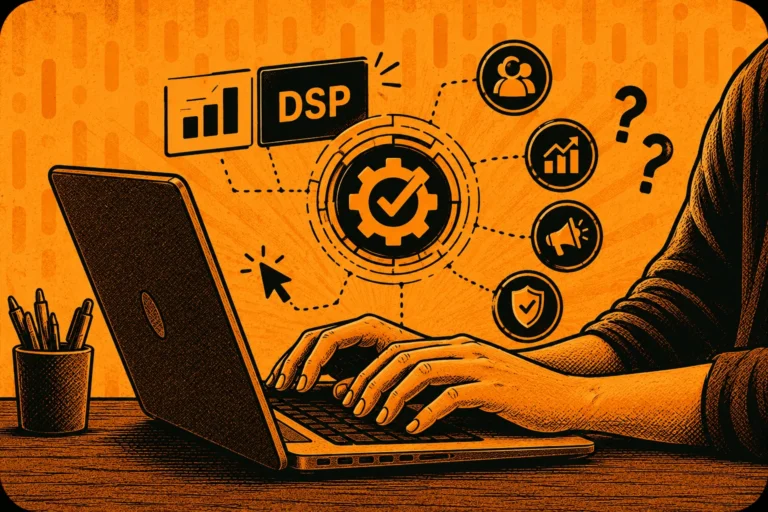
Self-serve DSPs are a great way for small and mid-sized agencies to level the playing field, get closer to the data, and run smarter, faster digital campaigns.
How Can Mid-Sized Agencies Compete with Large Agencies Using Scalable Advertising Solutions?
1. You get to move at your own speed.
For example, a client wants to launch a quick-turnaround campaign—say, to ride a trend or to match pace with a competitor in a particular geo. You brief your managed DSP partner. They promise to “circle back.” Days go by. The moment passes.
With a self-serve DSP, your team owns the timeline. You can set up, launch, pause, or optimize campaigns without the dependency. That flexibility means you can actually be the agile partner clients say they want without sacrificing quality or performance.
2. You stop paying for the middleman.
Margins matter more than ever. Especially when you’re operating in a space where some agencies promise full-funnel media services at incredibly low costs. In a competitive landscape like this, every dollar counts, and the pressure to deliver more with less is constant.
The challenge? Traditional DSP relationships often come with opaque pricing, platform markups, or commissions baked into fixed CPMs. You don’t always know what’s going where.
Self-serve gives you visibility into every dollar. You set the bids, control pacing, and can manage the budget with full transparency. Which means you can build in your own service layers—reporting, creative, optimization—and still stay competitive.
3. You don’t need to wait to access quality inventory.
There’s a common myth that only large-scale agencies can tap into premium supply like CTV, digital audio, or exclusive PMPs. And while those agencies do have leverage, that’s not the whole story.
Self-serve DSPs have evolved. Many now offer access to premium ad inventory across display, video, native, and even retail media channels—no matter the size of your agency or client.
That opens the door for you to pitch more integrated media plans, include higher-impact formats in your proposals, and retain clients who are ready to move beyond social and search.
4. You build media intelligence inside your agency.
The more hands-on your team is with programmatic, the faster you build real campaign intelligence. When you’re the one setting bids, watching audience segments perform, and optimizing in real time, you start to see patterns others might miss.
Why did one audience outperform another? Why did CPMs suddenly spike halfway through the campaign? What worked on mobile but not on desktop? Over time, these aren’t just questions—you start developing a clear instinct for what works and what doesn’t.
Over time, this turns into a competitive edge. You’re not just “running ads.” You’re developing a clear, data-backed point of view—one that builds trust with clients and positions you as a long-term partner, not just a media buyer.
5. You scale on your own terms.
Maybe today you’re running three digital campaigns a week. Maybe in six months it’ll be fifteen. The best part about self-serve DSPs isn’t just control but also scalability without overhead.
You don’t need to hire a specialized team or invest in complex enterprise tools. With a self-serve DSP, your existing media lead, strategist, or planner can manage campaigns, test creatives, and optimize performance—all within a single, easy-to-use platform.
That kind of lean, scalable setup is what makes self-serve DSPs such a natural fit for mid-sized agencies. You get access to serious tools without building an entire programmatic department from scratch.
Why Is Self-Serve Advertising Becoming Essential for Mid-Sized Agencies?
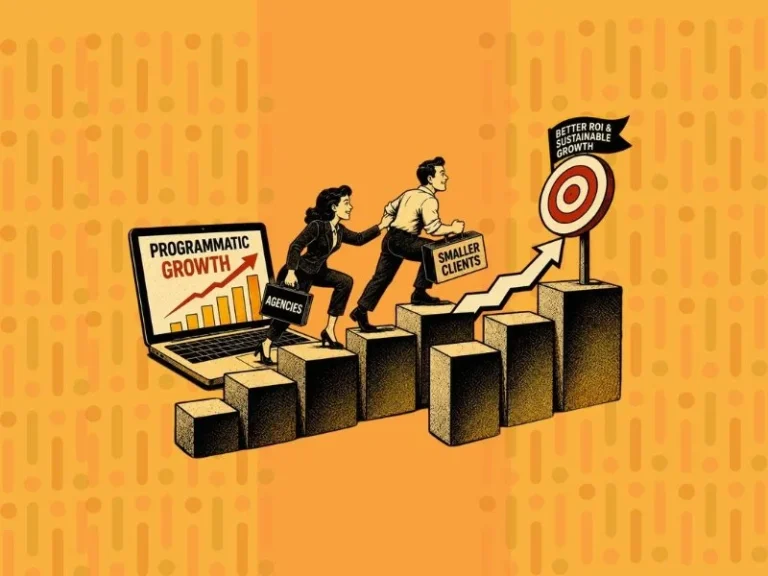
Not always. Some agencies will still need managed support or custom tech integrations. But for the growing number of shops that want to do more with less and actually own the outcomes they deliver, self-serve advertising is a smart, scalable path forward.
It’s about shifting how you operate as an agency. Moving from reactive to real time, from dependent to in control, and from margin-squeezed to margin-aware.
Because when you control the media, you control the outcome. And when you control the outcome, clients stick with you.