A campaign can hit delivery targets, spend its budget smoothly, and still leave a marketer with very little clarity on what actually influenced performance.
That problem shows up more often now, especially across larger programmatic campaigns running through streaming platforms, retail media environments, mobile apps, and open-web inventory at the same time.
One platform reports strong reach. Another attributes conversions differently. Audience overlap becomes difficult to track. Optimisation decisions get delayed because teams are trying to piece together performance from multiple systems instead of looking at one clear picture.
Meanwhile, clients are asking tougher questions.
-Why are CPMs rising?
-Which audiences are genuinely converting?
-Why does performance look different across platforms?
-And where is the incremental value actually coming from?
A lot of agencies are starting to realise the main issue is visibility.
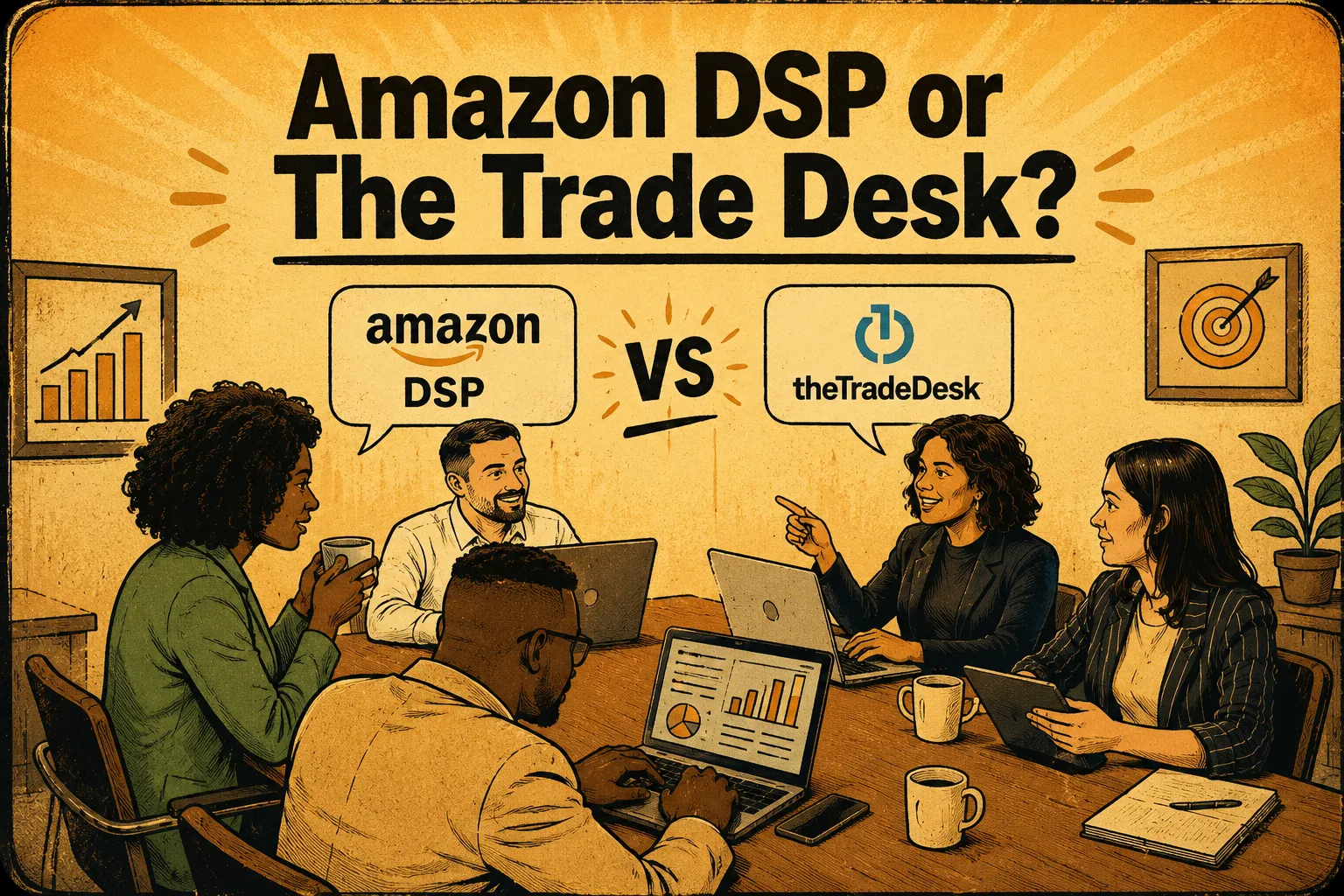
That shift is changing how programmatic strategies are being built. More agencies are combining Amazon DSP and The Trade Desk instead of treating them like competing platforms.
The reason is fairly simple. Each platform solves a different part of the problem.
Amazon DSP Gives Agencies Access to Stronger Intent Signals
One of the biggest benefits of Amazon DSP is the quality of audience data sitting behind it.
Agencies can use shopping behaviour, browsing activity, streaming engagement, and purchase-intent signals to build audiences around actual consumer behaviour rather than broad interest categories.
That changes the quality of targeting quite a bit.
A user casually interested in fitness content is very different from someone actively comparing running shoes, researching supplements, or watching related streaming content over the past week.
The second audience usually tells you far more about intent.
For agencies trying to improve efficiency, this matters more now than it did a few years ago. Media costs are higher. Clients expect stronger ROAS. Poor targeting decisions become expensive very quickly.
Another misconception agencies are moving away from is the idea that Amazon DSP only matters for brands selling products on Amazon.
A lot of advertisers now use Amazon’s audience signals to influence conversions happening elsewhere, whether that is a brand site, a dealership inquiry, a subscription signup, or a retail purchase outside Amazon entirely.
The Trade Desk Helps Agencies Expand Beyond Closed Ecosystems
Where Amazon DSP becomes valuable for commerce and streaming intelligence, The Trade Desk tends to help agencies solve for scale across the broader internet.
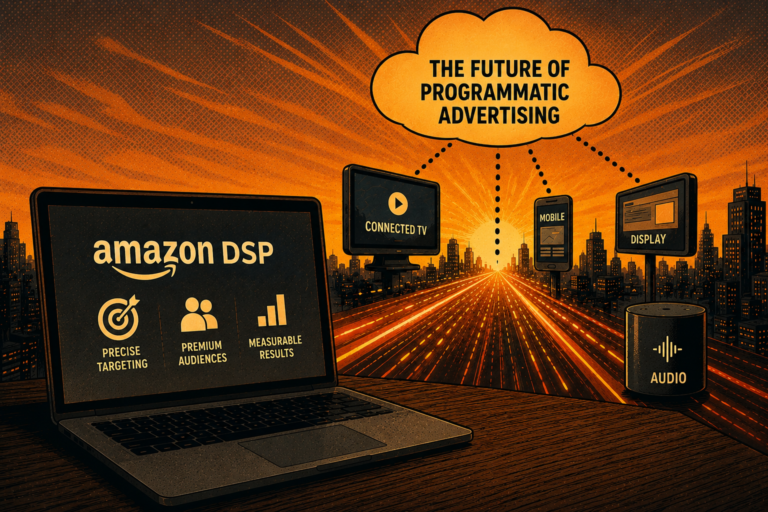
That becomes useful when campaigns need to move across connected TV, display, online video, audio, mobile, and premium publisher environments without becoming overly dependent on one ecosystem.
Many agencies are dealing with another issue right now: inventory quality.
Inexpensive inventory is still easy to buy programmatically. Reliable inventory is not.
Campaigns can scale impressions quickly while performance quality quietly declines underneath. Agencies notice this later through weaker engagement, lower conversion efficiency, or inconsistent attribution.
The Trade Desk gives buyers more flexibility around how they access and manage premium supply paths across the open internet. For agencies trying to balance reach with media quality, that flexibility matters.
Why Agencies Are Using Both Platforms Together
The more interesting shift happening across agencies is not really about choosing one DSP over another anymore.
It is about building campaigns around audience behaviour instead of platform loyalty.
A consumer might discover a product while streaming content on TV, research it later through retail environments, compare alternatives through publisher content, and convert days later somewhere completely different. Trying to understand that journey through one ecosystem alone has become harder.
This is where agencies are starting to combine the strengths of both platforms.
Amazon DSP helps sharpen audience intelligence through commerce and streaming signals. The Trade Desk helps extend campaigns across broader omnichannel inventory and premium open-web environments.
Used together, agencies gain more flexibility in how campaigns scale, how audiences are refined, and where optimisation decisions happen throughout the funnel.
More importantly, it gives teams a better chance of avoiding one of the biggest problems in programmatic advertising right now: fragmented visibility.
Managing Multiple DSPs Creates a Different Problem
Of course, using multiple platforms introduces operational pressure of its own.
Media teams already spend a significant amount of time pulling reports from different systems, comparing attribution models, managing overlapping audiences, and responding to client questions around performance discrepancies.
The operational side of programmatic advertising has become heavier.
This is partly why more agencies are looking for ways to simplify cross-platform activation without losing access to stronger audience signals and premium inventory environments.
Platforms like Vizibl are helping agencies approach this differently by enabling activation across premium programmatic ecosystems while maintaining greater visibility and control over campaign performance.
For agencies, the goal is not simply to access more inventory anymore.
It is to reduce wasted spend, improve optimisation speed, and make clearer media decisions before performance issues become expensive.
Why This Matters More in the UK Market
UK agencies are operating in a particularly competitive programmatic environment right now.
Clients expect stronger accountability around media spend. Connected TV budgets are increasing. Retail media continues expanding. At the same time, audience journeys are becoming less predictable across streaming platforms, ecommerce environments, mobile usage, and the open web.
That complexity changes how agencies think about media buying.
Reach alone is no longer enough. Agencies need stronger signals, better visibility into performance, and more flexibility in how campaigns are activated across channels.
That is one of the biggest reasons agencies are becoming more open to combining platforms like Amazon DSP and The Trade Desk instead of relying too heavily on one environment alone.
Because increasingly, campaign performance depends less on access to a single platform and more on how effectively agencies connect audience intelligence, inventory quality, and optimisation together.